
Cosmetic Dentistry
A smile is one of the first things we notice about a person. It is therefore natural to want it to be beautiful and harmonious, and to give us confidence when we smile.
In recent years, more and more patients have come to us with photos of smiles they have seen online or on social media, asking for the so-called Hollywood smile. We understand that wish. But we also know that a beautiful smile is not the same for everyone.
Book an Appointment Book an Appointment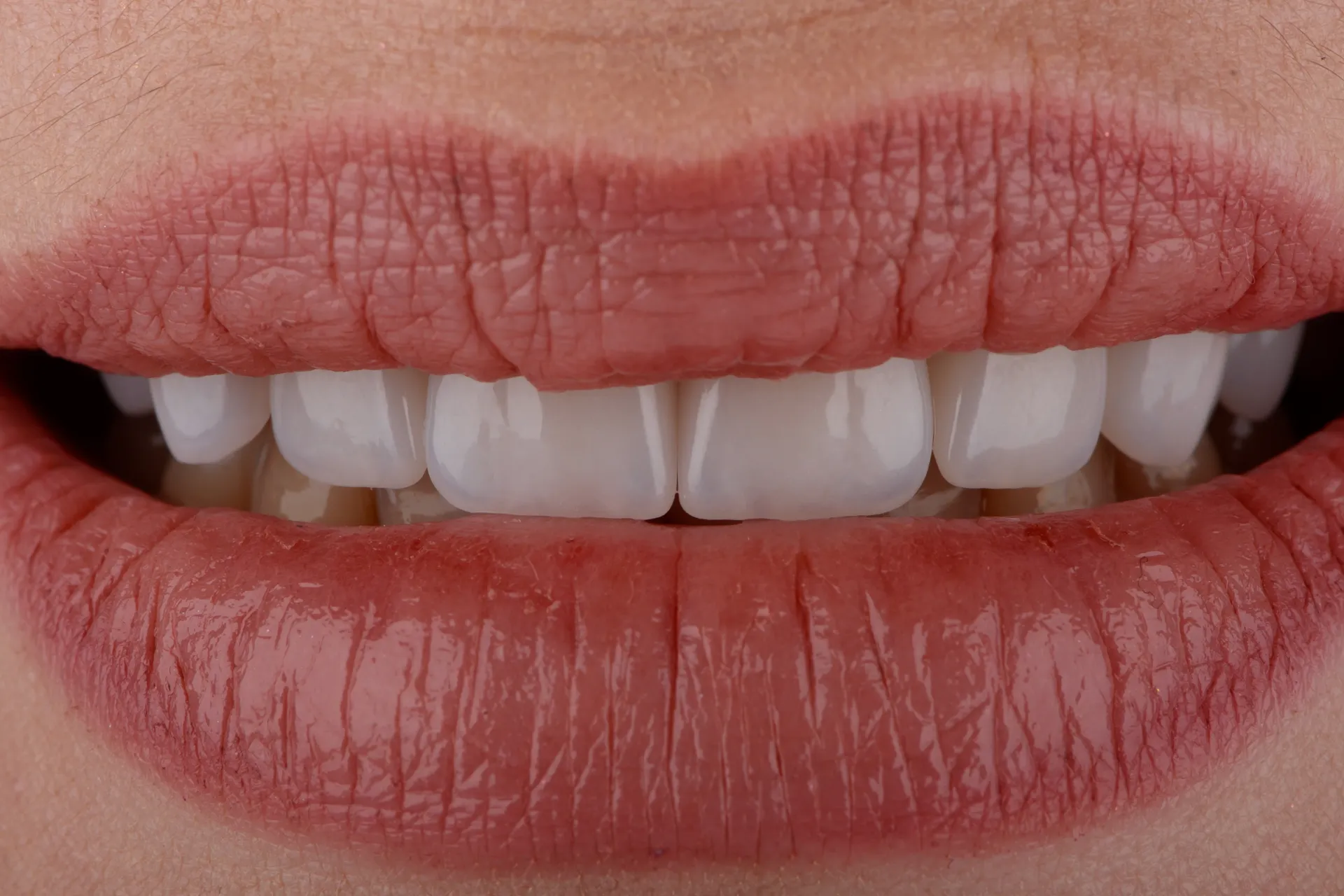
A smile that is uniquely yours
There is no single ideal tooth shape or one shade that is the most beautiful. Your smile should be in harmony with your face, your age, your lips, and the way you speak and smile.
Our aim is to make your smile look more beautiful than it does today while ensuring that it still looks natural.
We want you to see a more beautiful version of your own smile after treatment, not a smile that does not look like you.
Aesthetics must never come before health
A beautiful smile has no value if it is not healthy. That is why every aesthetic treatment begins with a thorough examination.
If there is decay, gum disease, periodontal disease or any otherproblem that compromises dental health, we address these issues first. Only then do we plan aesthetic treatment.
Health and aesthetics are not mutually exclusive. Quite the opposite: the most beautiful results are achieved when they are in balance.
Crowns, veneers and bridges are not the same solution for everyone
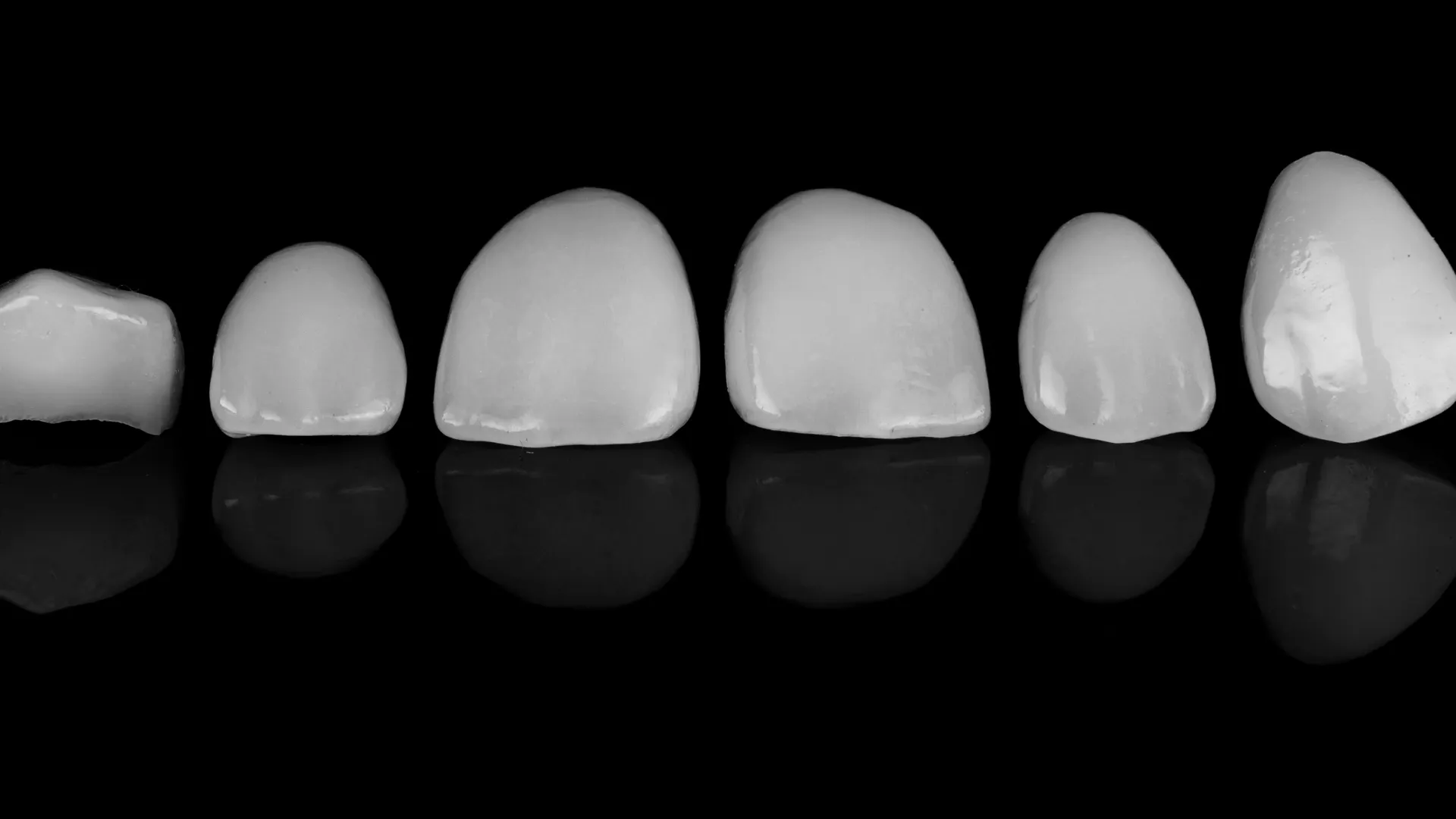
Modern dentistry offers many ways to improve the appearance of a smile. Sometimes changing the appearance of a single tooth is enough. Sometimes old crownsneed to be replaced. In other cases, complete prosthetic rehabilitation is necessary.
There is no template that suits everyone. That is why we tailor every treatment plan to your health, your wishes and the solution that will be best for you in the long term.
A successful result requires patience
Patients sometimes expect the final result to be ready after a single visit. This may be possible for minor corrections, but more complex treatments require more time, more try-ins and careful planning.
This is not a complication. It is how we ensure that every detail is tailored specifically to you.
A beautiful smile also needs to be maintained
A common misconception is that crowns, bridges or veneers no longer require special care. The opposite is true.
Good oral hygiene and regular check-ups are essential for prosthetic restorations to last. Thesame applies to implants.
New teeth do not mean the end of dental care. They mark the beginning of a new responsibility for your own oral health.
Beauty does not mean that we all have to look the same
We do not aim to create smiles that follow trends. We aim to create smiles that last.
We want you to be happy with your appearance after treatment, to smile with greater confidence and to feel that your smile has become more beautiful while remaining unmistakably yours.
Because the most beautiful smile is not one that resembles someone else’s. The most beautiful smile is the one in which you recognise yourself.
 Oral Surgery
Dr Rastko Ristić, specialist
Specialist oral surgeryDr Rastko Ristić graduated from the School of Dental Medicine in 2010. and completed his specialisation in oral surgery in 2021. at the University of Belgrade School of Dental Medicine. As an oral surgeon, he is particularly dedicated to the surgical treatment of oraldiseases, implant dentistry and complex prosthetic rehabilitation.
Questions and Answers
-
It depends on the treatment. This is sometimes possible for minor procedures. More complex prosthodontic rehabilitation, however, requires several stages because each step plays a role in achieving a stable and long-lasting result. We do not rush when we know that a little more time will produce a better result.
-
An adjustment period is completely normal. New teeth, bridges or dentures are a change that the body needs time to adapt to. At first, speech, chewing or the position of the tongue may feel slightly different. Some people adjust within a few days, while others need a little more time. This is not a sign that something is wrong; it is a natural process of adaptation.
-
They are long-lasting, but not lifelong solutions. Their lifespan depends on several factors: the quality of the work, the condition of the surrounding tissues, regular check-ups and, above all, how well you care for them. A well-made restoration, combined with good hygiene and regular check-ups, can serve you successfully for many years.
-
Yes. This is one of the most common misconceptions. Many people believe that crowns and bridges ili implanti no longer require special care because they are ‘artificial’. In fact, the opposite is true. They require careful, regular oral hygiene and check-ups so that both the restorations and the surrounding tissues remain healthy—sometimes even more often than natural teeth.
-
A porcelain-fused-to-metal crown consists of a metal substructure covered with a layer of ceramic. This provides functionality, but the aesthetic result is less natural. An all-ceramic crown is made from modern ceramic materials without a metal substructure. Thanks to its optical properties, it provides an exceptionally natural appearance and is the aesthetically superior option, particularly for front teeth. This does not, however, mean that a good result cannot be achieved with a porcelain-fused-to-metal crown. Both types of crown have their indications, and the choice depends on the position of the tooth, the extent of the prosthetic work, the condition of the remaining teeth and supporting tissues, functional requirements and the patient’s financial circumstances. Modern metal-free materials make it possible to produce many restorations that were previously made exclusively from porcelain fused to metal. Consequently, all-ceramic crowns and bridges are increasingly used in everyday practice. When a singlecrown is required, an all-ceramic crown is the best solution in most cases because of its aesthetic qualities and natural appearance. The final decision on the type of crown or bridge is made by the dentist after an examination, in accordance with the clinical findings and each patient’s needs.
-
Veneers are thin ceramic shells placed on the front surface of the teeth to correct their shape, colour or minor alignment irregularities. They are used when the tooth is healthy and well preserved and the bite is correct. Crowns completely cover the tooth. They are used when the tooth is damaged, after root canal treatment, or when the conditions in the mouth do not meet the criteria for veneers but the patient would like to improve the appearance of the teeth. Crowns restore the tooth’s strength, function and natural appearance. Bridges replace one or more missing teeth. They are supported by adjacent teeth or implants and are a fixed prosthetic solution for replacing a lost tooth. The best option depends on the condition of your teeth, the amount of remaining tooth structure, aesthetic expectations and functional needs. Only after an examination can the dentist recommend the treatment that will provide the best long-term result.