
Periodontology – when is the right time to save your teeth?
Periodontal disease is one of the most common oral conditions, but also one of the most insidious. It develops slowly, often over many years, without pain or obvious symptoms. That is precisely why many patients are unaware of the disease until they notice receding gums or loose teeth.
The good news is that periodontal disease does not automatically mean losing your teeth.
Book an Appointment Book an Appointment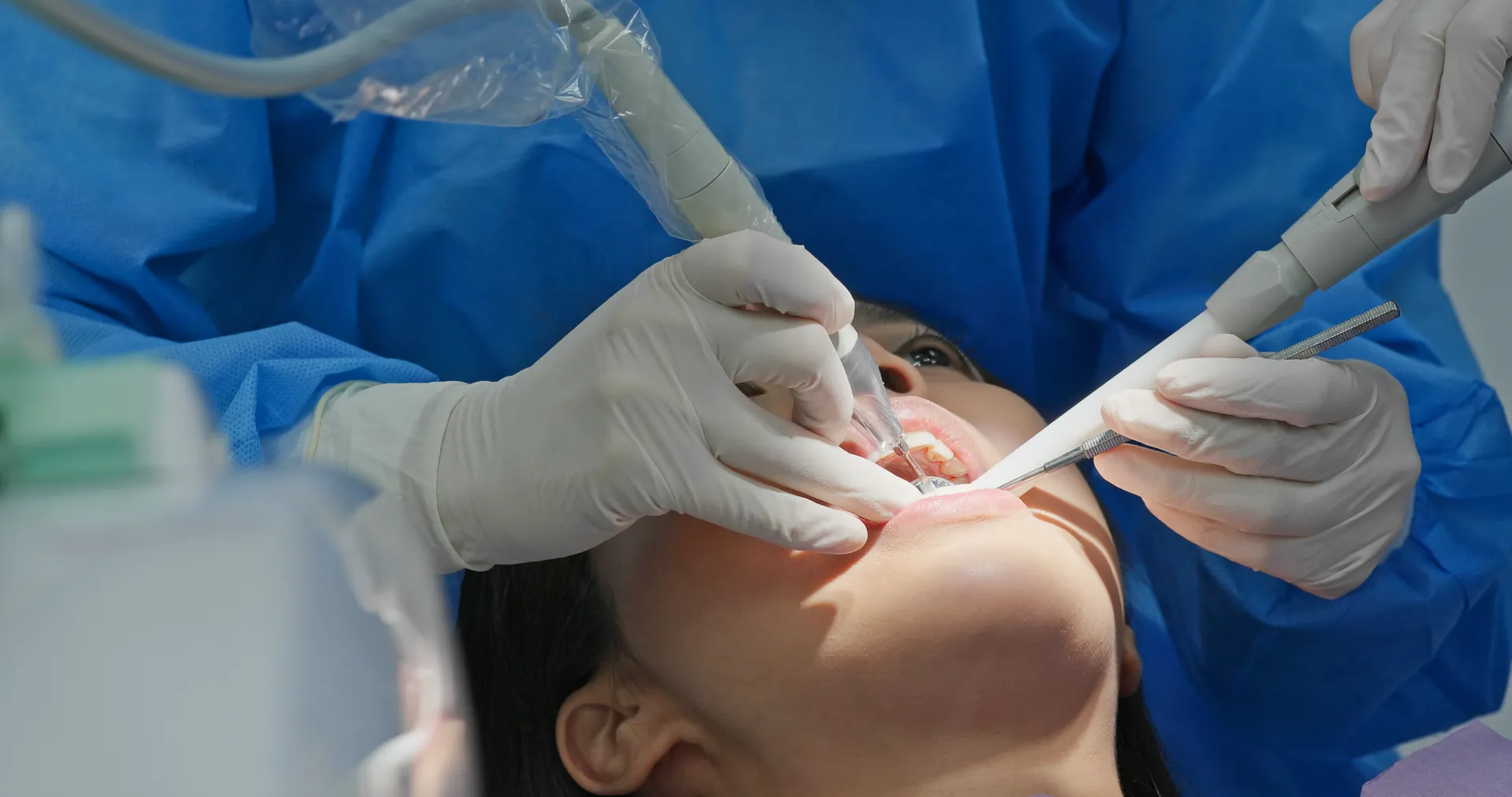
In many cases, the disease can be stopped and kept under control, allowing natural teeth to be preserved for many years. The earlier it is detected, the greater the treatment options and the simpler the therapy.
Bleeding gums are not normal
Bleeding gums are usually the earliest sign that something is wrong.
This does not necessarily mean that you already have periodontal disease. It is often gingivitis – inflammation of the gums that can be treated successfully if detected in time.
The problem arises when the inflammation is left untreated.
The infection then gradually spreads to the deeper tissues that hold the tooth in the bone. As the disease progresses, bone is lost, the gums recede and the tooth-supporting structures weaken.
That is why bleeding gums should never be ignored, even if the bleeding stops on its own after a while.
Early detection is your greatest ally

A thorough examination and a single panoramic X-ray are often enough to detect the first signs of the disease.
Unfortunately, this part of the examination is sometimes overlooked because the patient has no pain or pronounced symptoms.
That is why, during every examination at our clinic, we also pay close attention to the health of the gums and tooth-supporting structures. Our aim is not to detect the disease once it has caused a major problem, but much earlier, when it can be successfully controlled.
Is it already too late?
Nearly every patient asks this question.
And the answer almost always begins in the same way:
We cannot know until we examine each tooth individually.
In some situations, a tooth truly cannot be saved.
Much more often, however, there are teeth that can remain in the mouth for many more years with proper treatment and regular maintenance.
Modern periodontal surgery now enables procedures that were not possible a few decades ago. Depending on the stage of the disease, regenerative surgical techniques, bone grafting materials and membranes can help preserve the tooth-supporting structures and slow or stop the progression of the disease.
There is no one-size-fits-all solution.
Each tooth has its own prognosis, which is why every patient receives an individual treatment plan.
Surgical treatment of periodontal disease
In advanced periodontal disease, tartar removal and infection control are not sufficient. Surgical treatment aims to stop disease progression, reduce pocket depth and preserve natural teeth in the long term. Where indicated, modern regenerative procedures are used.
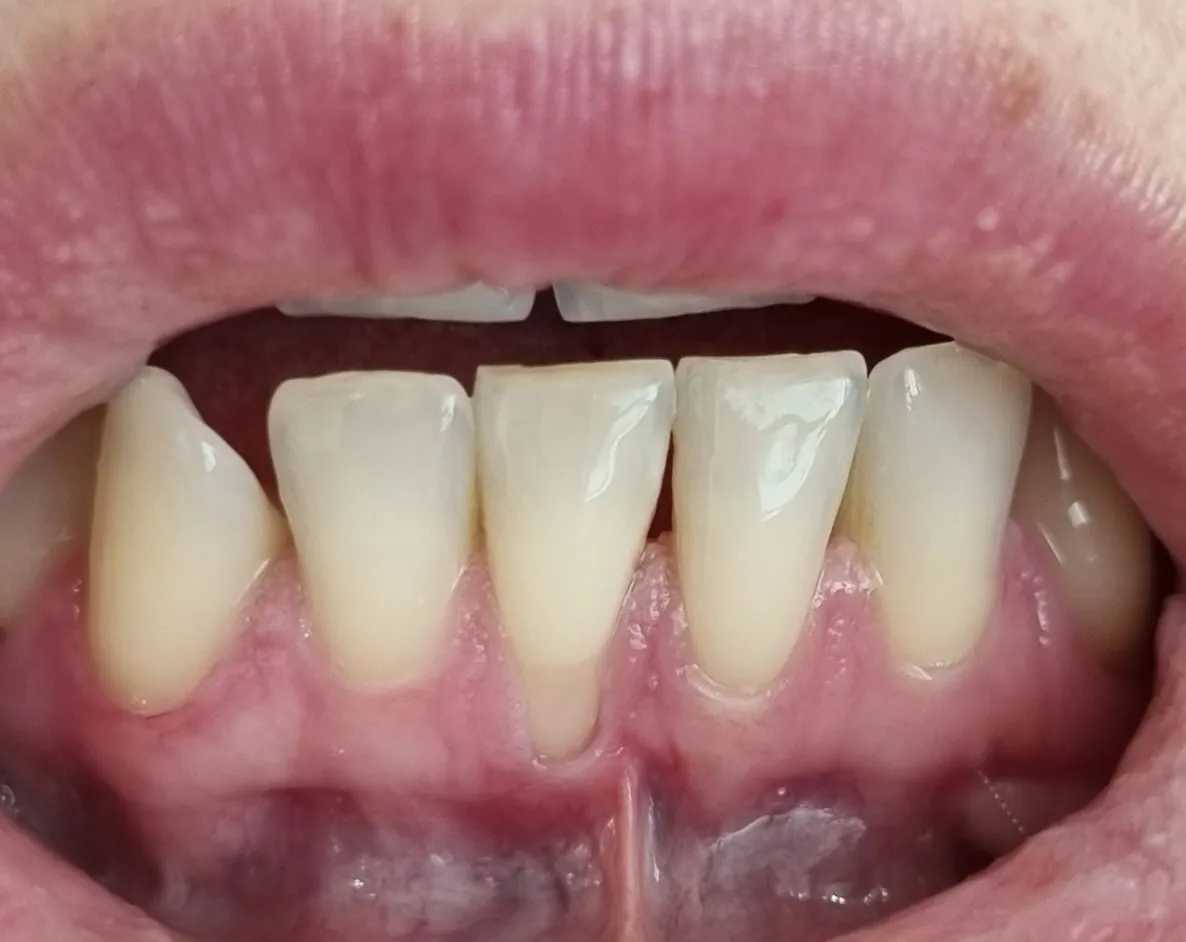
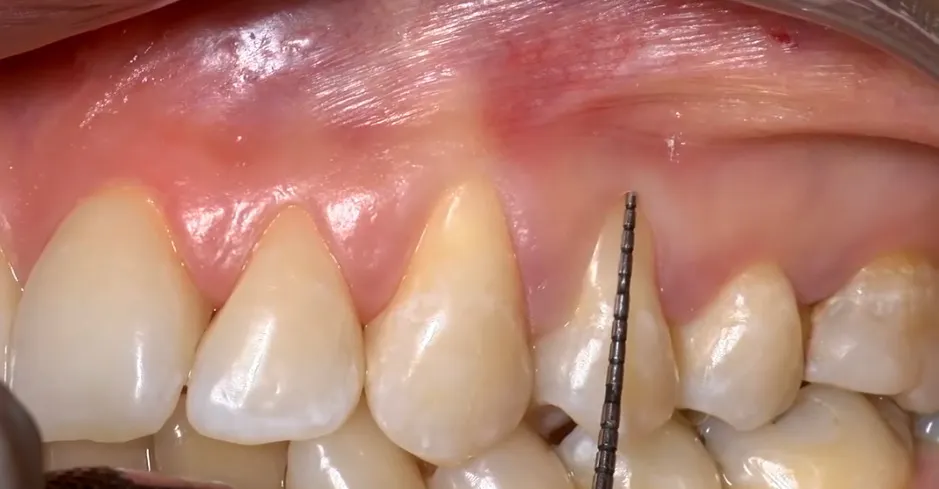
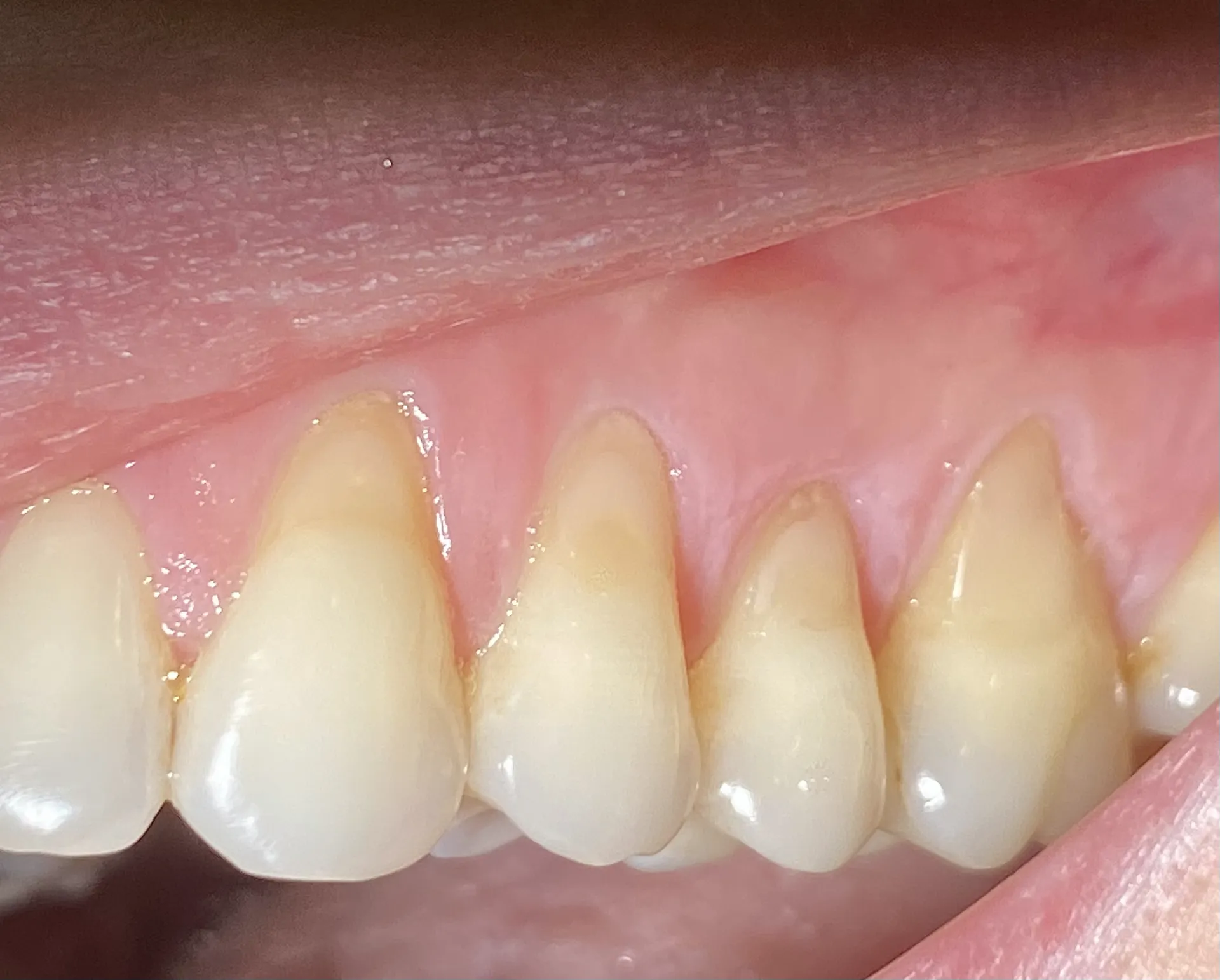
Gingival recession
Gingival recession is the receding of the gums, which exposes the tooth root. It cannot be reversed with toothpastes, gels or other products. Where indicated, it is treated exclusively by surgery following a thorough examination.
Why don’t we rush into implants?
Implants are an excellent solution when a natural tooth can no longer be saved.
But they are not better than a healthy natural tooth.
That is why our first priority is always to preserve what you already have.
There is another important reason.
Infected bone cannot receivean implant.
For this reason, periodontal disease must first be brought under control. Only once the gums and bone are healthy can wesafely plan implant treatment, if it is needed at all.
Our goal is more than simply treating the disease
Periodontal disease is a chronic condition.
This means that it requires long-term monitoring and cooperation between the patient and the dentist.
That is why we do not look only at today’s findings.
We consider what your teeth will be like in five, ten or twenty years.
Our goal is not to recommend the greatest number of procedures.
Our goal is to preserve your natural teeth for as long as possible.
Because we still believe that a natural tooth is the best solution anyone can have.
 Periodontology and Oral Medicine
Dr Tamara Ristić, specialist
Specialist in periodontology and oral medicineDr Tamara Ristić holds a PhD in medical sciences and is a specialist in periodontology and oral medicine. During her academic career, she attained the rank of assistant professor,taught future dentists, participated in research projects and published numerous professional and scientific papers.
Questions and Answers
-
No. Receding gums cannot be restored to their original position with gels, oils, massage or other products advertised for this purpose. Once the gums have receded and the tooth root is exposed, the only way to return them to their natural position is appropriate surgical treatment, provided that the clinical indications are present. It is important to emphasise that not every case of gum recession is suitable for surgical treatment. The treatment decision is made after a detailed examination and assessment, because success depends on several factors, including the cause of the recession, the amount of remaining supporting tissue and the overall condition of the gums. This is precisely why a professional diagnosis is the first and most important step in choosing the right treatment.
-
No. Periodontal surgery is performed under local anaesthesia, so the patient does not feel pain during the procedure. You may feel slight pressure or pulling of the tissues, which is completely normal, but not pain. The duration of the procedure depends on the number of teeth being treated and the extent of the surgery. Even when the maximum number of teeth in both jaws is treated, the procedure takes no more than two hours. Mild tenderness and swelling may occur afterwards. These are expected parts of the healing process and can be effectively managed with the prescribed medication and by following the postoperative instructions. In our experience, most patients experience only mild discomfort on the first day, which is successfully controlled with standard painkillers. By the following day, most patients have no significant symptoms and are mainly aware only of the sutures. This is why patients very often tell us after completing treatment that recovery was much easier than they had expected.
-
In most cases, recovery after periodontal surgery is very quick and involves no major discomfort. Mild discomfort and pain may occur on the first day after the procedure and can be effectively controlled with painkillers. Patients return to their usual daily activities almost immediately, although they are advised to avoid strenuous physical activity and intense exercise during the first seven days. Mild tenderness is an expected reaction after the procedure. Swelling may occur, but in most cases it is absent or very slight and subsides over the following days. The sutures are removed seven days after the procedure. During this period, a softer diet is recommended, consisting of foods that will not mechanically irritate the surgical site or damage the sutures. This does not mean that you must eat only puréed food; simply avoid hard and sharp foods. Proper oral hygiene is an important part of a successful recovery. During the first seven days, we recommend using an ultra-soft toothbrush to clean the teeth and gums gently. Do not use interdental brushes, dental floss, an oral irrigator (Waterpik) or harsh mouthwashes during this period. Rinsing or vigorously swishing any solution around the mouth is also not recommended, nor is the use of home remedies such as bicarbonate of soda. Simply follow the postoperative instructions you will receive after the procedure. Our experience shows that almost all patients return to their daily routines very quickly when they follow these simple recommendations.
-
Very rarely. Bleeding gums are a sign of inflammation. Sometimes the inflammation may temporarily subside, giving the patient the impression that the problem has resolved on its own. In reality, the cause of the inflammation is still present and the infection continues to smoulder. Mouthwashes may temporarily relieve the symptoms, but they do not remove the underlying cause of the bleeding. So the answer is usually simple: no. Bleeding gums should not be ignored; the cause must be identified and treated.
-
There is no scientific evidence that periodontal disease is directly inherited. What can be inherited is a greater susceptibility to developing the disease. Genetics can influence the composition of saliva, the body’s immune response or susceptibility to the growth of certain bacteria. However, periodontal disease cannot develop without dental plaque. This means that, regardless of genetic predisposition, proper oral hygiene remains the most important factor in preventing the disease.
-
That is precisely one of the biggest pitfalls of this disease. Periodontal disease is usually painless, which is why many patients do not notice that anything is happening until the disease has already progressed. Pain occurs only in certain acute conditions, such as when an abscess or severe infection develops. Bleeding gums, bad breath, gum recession or loose teeth are therefore much more important warning signs than pain itself. The problem with periodontal disease is precisely that it does not hurt.
-
No. Tooth mobility does not automatically mean that the tooth needs to be removed. It all depends on how mobile the tooth is, what caused the condition and how much of the supporting tissue has been preserved. When mobility is limited, there are often ways to stabilise and save the tooth. We therefore never make this decision without a proper assessment. The first step is an examination and evaluation of the condition, after which we can recommend the best solution.
-
No. Gum recession is not always caused by periodontal disease. There are other conditions, such as localised gingival recession, in which the gums recede without periodontal disease being present. This is why an accurate diagnosis is essential before any treatment begins.
-
Twice a year. This applies to everyone, whether their gums are healthy or they have periodontal disease. For patients with periodontal disease, check-ups and professional tartar removal are usually required three to four times a year, depending on the severity of the condition. Regular tartar removal is not merely a cosmetic procedure. It is one of the most important ways to preserve the health of both the gums and the teeth.
-
Now. You should not wait until something hurts before visiting the dentist. Regular check-ups twice a year allow any problems to be detected early, when treatment and recovery are simpler. The best check-up is one after which we can tell you that your teeth and gums are healthy.
-
Periodontal disease is a chronic condition and requires lifelong care. This does not mean that you will be undergoing treatment for the rest of your life. It means that once the disease is under control, it must be kept that way. Regular check-ups, good oral hygiene and professional tartar removal are the best way to preserve your teeth and prevent the disease from progressing again.