
Digital Dentistry
Digital dentistry involves the use of modern digital technologies in the diagnosis, planning and delivery of dental treatment. However, digital technologies are no substitute for the dentist’s expertise, experience and clinical judgement. They are modern tools that make certain procedures simpler, more precise and more efficient, for the benefit of the patient.
Book an Appointment · 063 161 0939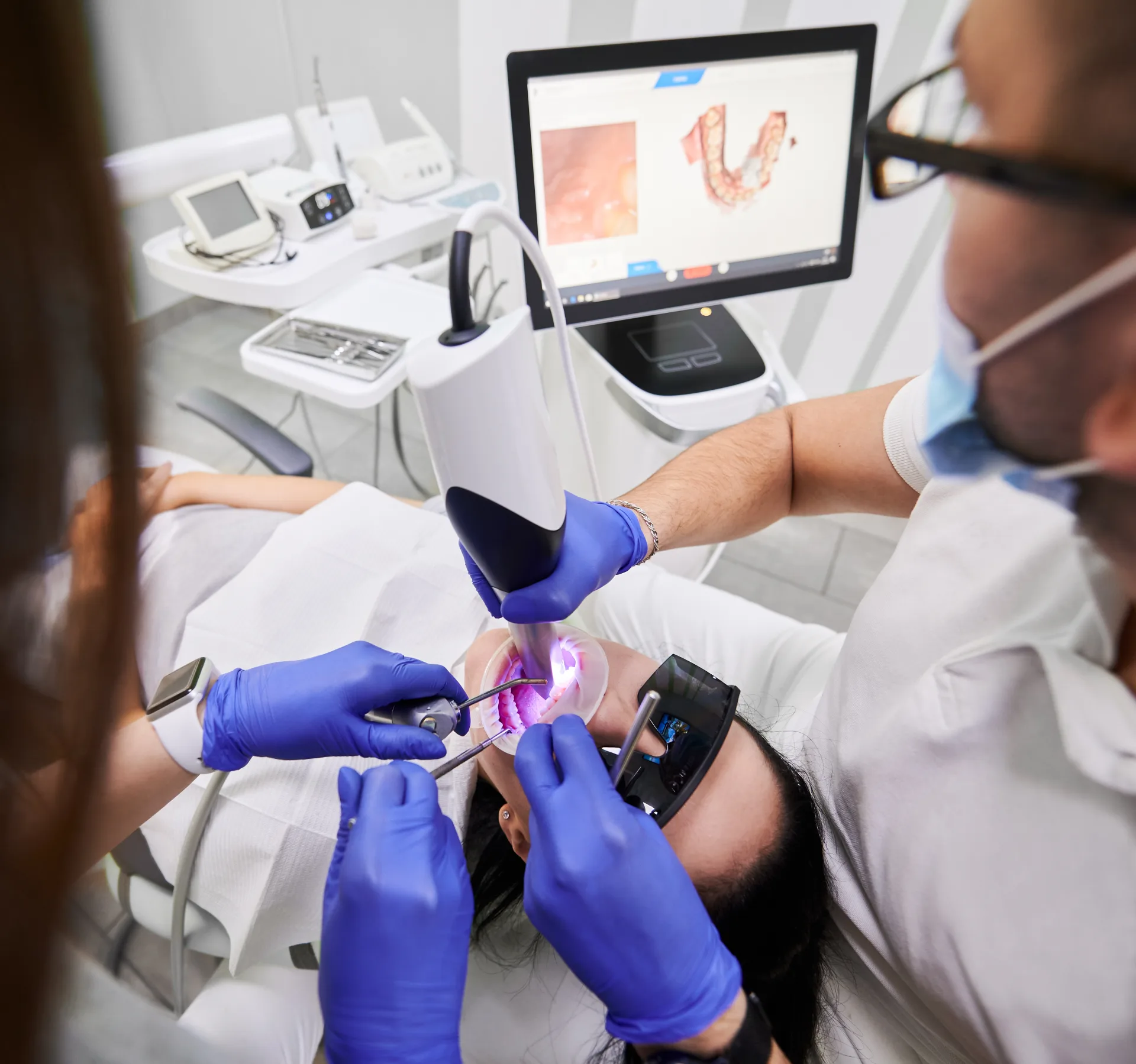
Digital intraoral scanner
One of the most important tools in modern digital dentistry is the digital intraoral scanner. Unlike conventional impressions made with impression materials, a digital scanner captures the teeth and surrounding tissues with exceptional precision and creates a three-dimensional model. The procedureis more comfortable for the patient, and the resulting digital impression provides a reliable basis for planning and fabricating dental restorations.
It is important to emphasise that a digital intraoral scanner is not used for diagnostic imaging and does not emit ionising radiation. Unlike medical imaging devices, an intraoral scanner uses light to capture the surface of the teeth and gums and create a digital three-dimensional model.
What is CAD/CAM technology?
Digital impressions provide the basis for using CAD/CAM technology. The term refers to the computer-aided design and computer-aided manufacturing of dental restorations such as ceramic crowns, bridges, inlays, onlays and other prostheses. In addition to a high degree ofprecision, CAD/CAM technology enables a more efficient workflow and, in many cases, reduces the time required to fabricate dental restorations.
A modern digital workflow enables more efficient communication between the dental clinic and the dental laboratory, contributing to more precise fabrication of dental restorations and greater predictability of treatment.
We believe modern technology reaches its full potential only when it serves professional expertise and experience. Digital dentistry therefore plays an important role in our work, with the aim of providing each patient with treatment that is precisely planned, performed to a high standard and predictable over the long term.
 Oral Surgery
Dr Rastko Ristić, specialist
Specialist oral surgeryDr Rastko Ristić graduated from the School of Dental Medicine in 2010. and completed his specialisation in oral surgery in 2021. at the University of Belgrade School of Dental Medicine. As an oral surgeon, he is particularly dedicated to the surgical treatment of oraldiseases, implant dentistry and complex prosthetic rehabilitation.
Questions and Answers
-
No. A digital intraoral scanner is not used for diagnostic imaging and does not emit ionising radiation. It uses light to capture the surface of the teeth and gums and create a digital three-dimensional model.
-
restorations such as ceramic crowns, bridges, inlays, onlays and other prostheses. It provides a high degree of precision, a more efficient workflow and,in many cases, reduces the time required to fabricate dental restorations.